
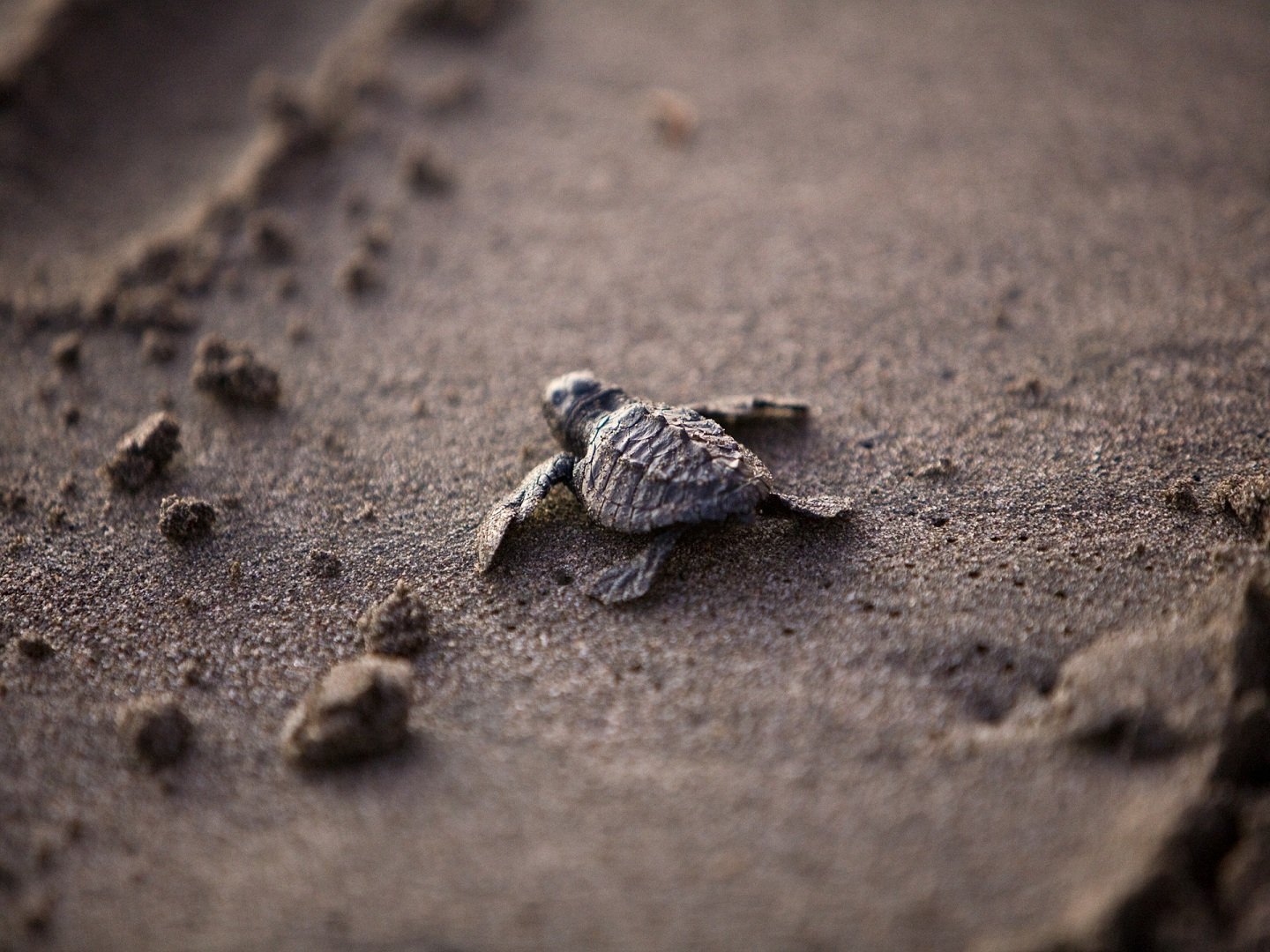
The Olive Ridley turtles made a common sight some half a decade ago but they have been mercilessly killed over the years to serve human consumption. People have been devouring on their eggs and meat for long and the present scene is such that this species of adorable turtles has come down to the verge of extinction.
Interestingly, these turtles spend much of their adulthood in the depth of seas but when it comes to nesting they don’t settle for anything other than the shoreline. The shores of Orissa, Andhra Pradesh, Tamil Nadu and Andaman and Nicobar Islands are amongst Olive Ridley’s favorite nesting sites. So, you can spot them there. However, if you want to see umpteen numbers of these turtles together then taking a stroll along the beaches of Orissa would be the best bet for you. In fact, three of the most vital breeding shorelines in the country are in Orissa and you can literally see mother turtles heading to the shores here to lay eggs.
The most favourable time to visit these tranquil beaches stretches from January to March. It is this time when a large portion of a million Olive Ridleys ascend to the shores for laying eggs. Tourists throng these sites to witness this wonder of nature. The sight is so overwhelming that paying a second visit here seems like no big deal. Bhitarkanika wildlife sanctuary is one of the most conspicuous locales where this miraculous sight can be experienced. Mouths of Devi and Rushikulya waterways are the other two most prominent sites.
While in Bhitarkanika, don’t forget to pay a visit at Gahirmata, which is the most suitable spot to see these turtles in action. About 7, 00,000 hatchings happen here almost every year. Since, majority of the hatchings take place in the darkness of night, you will have to set out at night to witness tiny turtles discarding their shells. Once born, they don’t wait to be on the beach. Instead, they march forward and set out on their trip down to the sea. It’s overwhelming to see so many mini turtles making their way to the sea where they spend whatever remains of their life, and then return to the shore only when it’s time for them to lay eggs.
If the moms have to protect their eggs from predators they will have to keep them buried deep inside the sand. And that’s exactly what they do. A two-month long time is required for the eggs to incubate. But long before this hatching time is over, the eggs are hunted down and consumed by locals. So, the nesting places of these eggs turn into graveyards. As a result, only a few hatchings materialize and all this happens because Olive Ridleys’ eggs and meat are of extraordinary interest to an incredibly large number of people who don’t cringe to shell out any amount of cash for a good deal.
This gives poachers the impetus to carry on with this brazen feat. But this has to stop. If it doesn’t, there will be no Olive Ridleys adorning the shorelines of India.